When Juan Sebastián Elcano took to the helm of the Victoria, shortly after the death of Ferdinand Magellan in the Philippines, few would have believed that the hands determinedly gripping the wheel belonged to the man destined to become the first person to circumnavigate the globe. There is no expedition, no accomplishment, no feat in the history of humanity that did not at first seem like madness to the rest of the world, eliciting startled mutterings and suspicious glances among all who caught wind of such new and impossible ambitions. Likewise, there has been no human exploit that, once achieved, did not become an obsession for thousands of followers, all vying fervidly to go further and do better, one of the primordial impulses of the human species. Our intelligence is a social phenomenon, and we advance by conquering new frontiers and building on the successes of our ancestors. No civilisation can ignore what has come before; we are constantly calling upon our common experience, and sometimes inspiration comes from a place beyond the rational realm, a place we refer to as the collective unconscious.
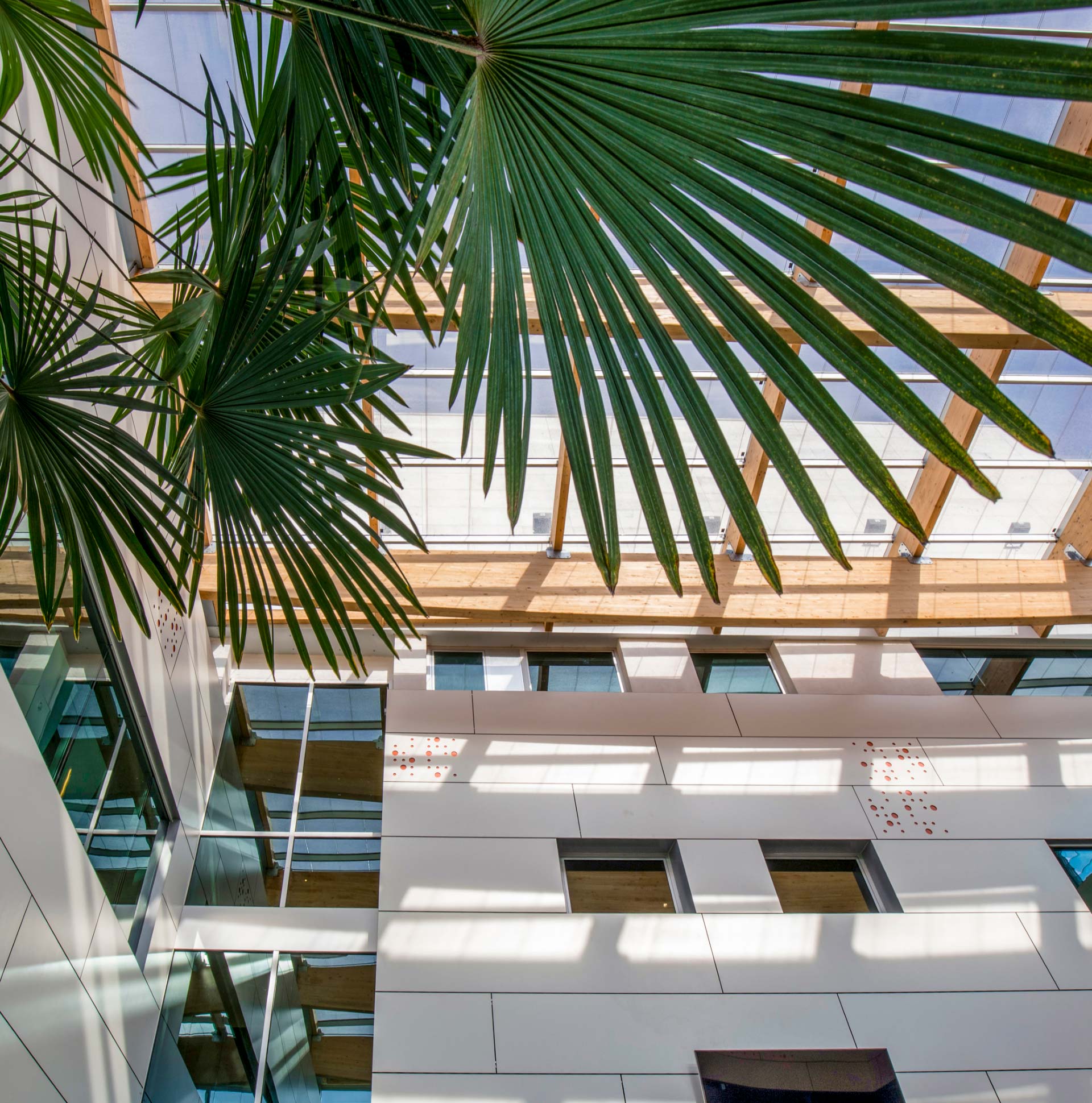
Just one small part of the Earth’s finely balanced terrestrial ecosystems, humanity now dreams of a new kind of city, where water, air and space come together in our quest for energy and shelter. The architect’s challenge is to bring the cosmos into the compass of our own breath – to breathe in call and response to nature’s rhythms. Thirty years ago, Julio Cano Lasso dreamed of a building that would melt into its setting, becoming a natural component of its environment. At the time, many were taken aback by the Elcano building’s minimal environmental footprint, its spatial versatility and its dialogue with the sun, the rain and the silence. Today, we cannot afford to build any other way – not if we want human activity to be compatible with life. The innovation exemplified by the nautical tour de force that is the Elcano building has become an indelible part of its identity. We need to keep believing that yesterday’s follies can become today’s solutions, and tomorrow’s dreams.
 2/3
2/3 
Cuando Juan Sebastián Elcano, tras la muerte de Fernando de Magallanes en las islas Filipinas, se puso al frente de la nao Victoria, pocos habrían creído que las manos que sujetaban tenazmente el timón pertenecían al primer ser humano destinado a realizar una vuelta completa al mundo. No hay ninguna expedición, ningún hito, ninguna hazaña en la Historia de la Humanidad que antes de haber sido consumada no pareciera a todos una locura, que no suscitara previamente cuchicheos asustadizos y reprobatorios entre quienes se enteraban de las nuevas e imposibles aspiraciones. De igual modo, no hay gesta humana que, una vez lograda, no se convierta en una obsesiva repetición para miles de semejantes, en un afán de superación y perfeccionamiento que forma parte de los impulsos primordiales de la especie. Nuestra inteligencia es un concepto social, pues continúa avanzando sobre las bases de las conquistas y los resultados de nuestros antecesores. La civilización no solamente no puede ignorarse a sí misma, sino que se retroalimenta sin cesar, a veces desde territorios que no forman parte de la racionalidad y que solemos denominar el inconsciente colectivo.
La innovación, como en la proeza náutica de Elcano, se convierte en tradición ineludible en la existencia de este edificio singular. Como una pieza más de los delicados ecosistemas terrestres, el ser humano sueña una nueva urbanidad en la que el agua, el aire y el espacio se armonicen en la búsqueda de soluciones energéticas e inmobiliarias. El reto de la arquitectura es tratar de armonizar la medida del cosmos a nuestra propia respiración. Ser capaces de respirar reinterpretando la cadencia de la naturaleza. Hace treinta años, Julio Cano Lasso soñó un edificio que se mimetizara con su emplazamiento para formar parte natural del entorno. Muchos se asombraron entonces al ver la mínima huella ambiental del Edificio Elcano, su versatilidad espacial, su diálogo con el sol, el silencio y la lluvia. Hoy ya no se concibe construir de otra manera, si queremos que la actividad humana sea compatible con la vida. La innovación, como en la proeza náutica de Elcano, se convierte en tradición ineludible en la existencia de este edificio singular. Porque debemos seguir creyendo que las locuras de ayer son las soluciones de hoy y los sueños de mañana.